
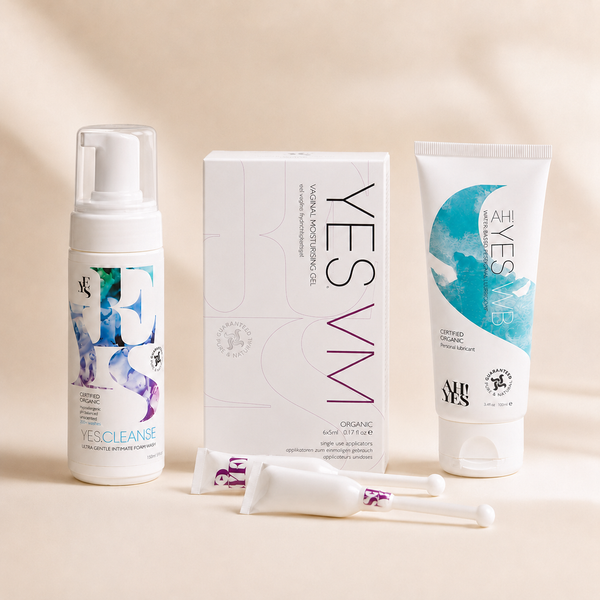
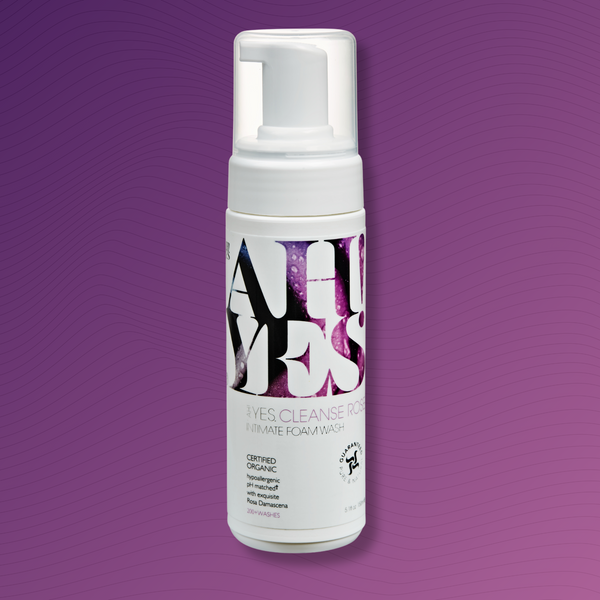

CLEANSE Intimate Wash

Scent::
FREE Shipping* on orders over $50

Have a discount code? Add it in the next step.
4.8/5 based on 1,630 reviews
“It burns.” “I feel drier afterward.” “It’s like it makes the problem worse.”
If you’ve ever used a lubricant that left you feeling more uncomfortable than before, there’s a real, measurable reason why, and it has a slightly unglamorous name: osmolality.
It’s one of the most important factors almost no lubricant talks about. Once you understand it, a lot of frustrating experiences suddenly make sense.
Osmolality measures how concentrated a fluid is — in other words, how many dissolved particles (such as sugars, salts, and glycols) it contains compared with your body’s own fluids.
Water naturally moves across cell membranes from areas with lower concentrations to areas with higher concentrations in an attempt to create balance.
When a highly concentrated (hyperosmolar) lubricant comes into contact with the delicate, water-rich tissues of the vagina, it can actually pull water out of the surface cells through a process called osmosis.
The result is exactly what many women describe:
Research has shown that highly hyperosmolar lubricants can damage the surface layer of vaginal tissue. This protective layer plays an important role in maintaining vaginal health, so disrupting it may increase irritation and may leave tissue more vulnerable to infections such as bacterial vaginosis (BV) and, in some studies, increase susceptibility to sexually transmitted infections (STIs).
Healthy vaginal secretions typically have an osmolality of around 260–370 mOsm/kg.
The World Health Organization (WHO) recommends that personal lubricants ideally have an osmolality of 380 mOsm/kg or lower, with 1,200 mOsm/kg considered the interim upper safety limit.
However, many commercially available lubricants have been measured at 2,000–6,000 mOsm/kg — several times higher than your body’s natural range.
High osmolality doesn’t happen by accident.
It’s commonly caused by ingredients such as:
These ingredients are often added to improve texture and moisture retention, but in high amounts they significantly increase osmolality and may also irritate sensitive vaginal tissue.
WHO guidance also links lower osmolality with keeping glycol content low.
As a general rule, products without large amounts of glycerin or propylene glycol are more likely to be gentle and closer to your body’s natural environment.
For an everyday water-based lubricant, it’s worth checking for a few key things:
pH and osmolality work together, but they’re different things.
After menopause, vaginal pH often becomes more alkaline (higher). When you first begin using a well-formulated product that’s correctly pH-matched (around pH 4.5), you may notice a brief tingling sensation as the vaginal environment begins returning to its normal acidity.
That temporary sensation usually settles with continued use.
This is very different from the persistent burning caused by a harsh or hyperosmolar lubricant.
As a general guide:
Osmolality and pH mainly apply to water-based lubricants, since they contain water.
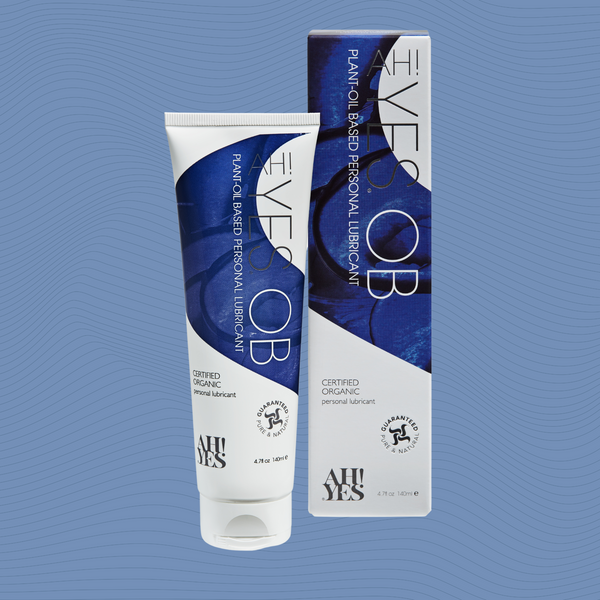
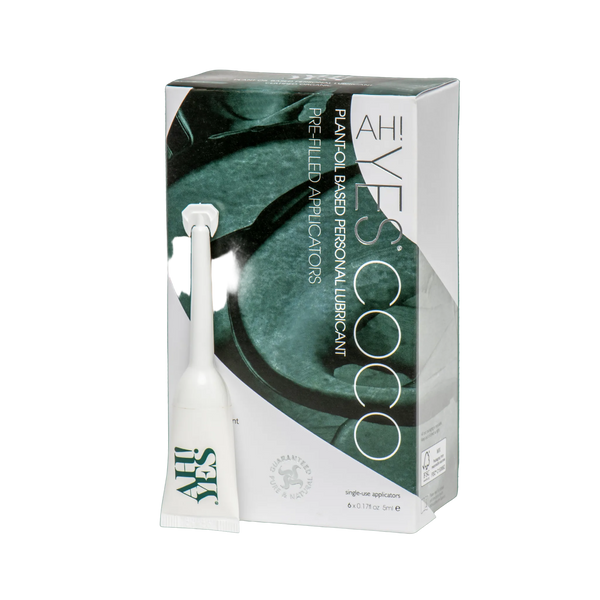
Oil-based lubricants, like AH! YES COCO and AH! YES OB, work differently. Rather than interacting with water inside your tissues, they create a protective, nourishing layer that cushions the skin and reduces friction.
Many women find oil-based lubricants especially comfortable for longer-lasting lubrication or ongoing dryness.
The trade-off is that oil-based lubricants are not compatible with latex condoms.
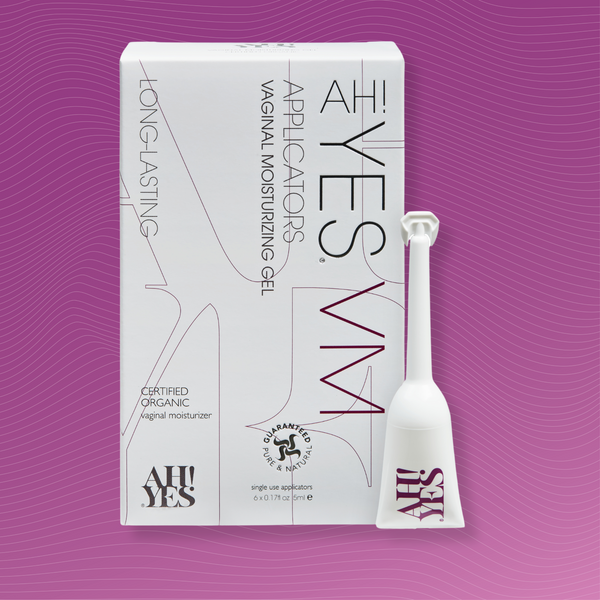
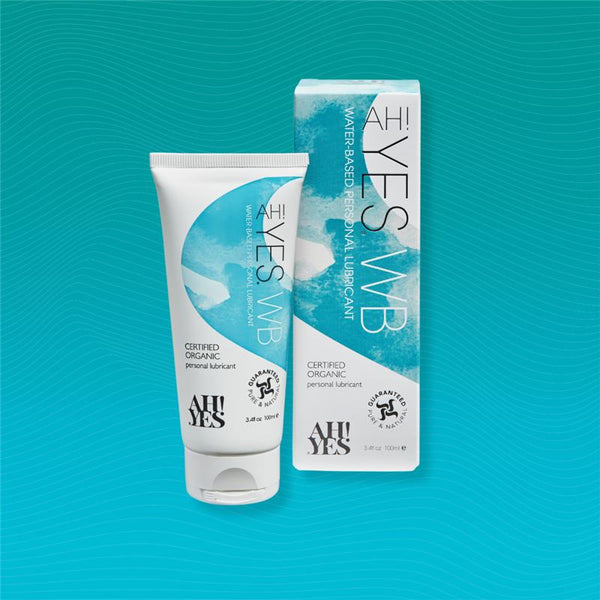
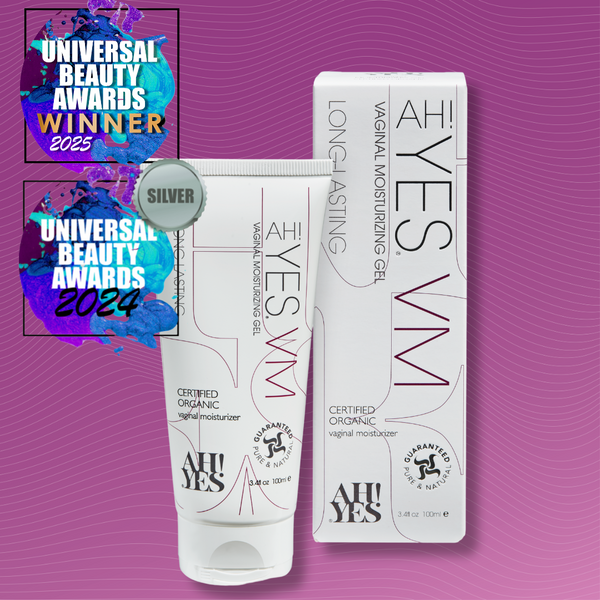
At AH! YES, we formulated our Water-Based Lubricant and Vaginal Moisturizer to be both iso-osmotic and pH-matched, helping them work in harmony with your body’s natural vaginal environment rather than against it.
They’re also:
Because relief should never come at the expense of your vaginal tissue.
If your current lubricant stings, it genuinely isn’t “just you.”
Switching to a body-matched, iso-osmotic formula can make a noticeable difference in comfort and long-term vaginal health
Sources / further reading:
- WHO/UNFPA Advisory Note on condom-compatible personal lubricants (TRS 1025, Annex 11)
- Characterization of commercially available vaginal lubricants — a safety perspective (PMC)
- StatPearls: Genitourinary Syndrome of Menopause (NCBI Bookshelf)
Read more about the changes your body goes through during peri menopause and post menopause.


