Lubricant labels can read like a chemistry exam, and one of the most important properties, osmolality, usually isn’t listed at all. This guide sorts the terms you’ll actually meet into three simple groups, so you can tell at a glance what to look for and what to put back on the shelf.
How to use this guide
Think of it like a traffic light:
- 🟢 Look for: gentle, body-friendly ingredients and properties.
- 🟠 Check the label: not always a problem, but worth a closer look, especially if they appear near the top of the ingredient list.
- 🔴 Best avoided: common irritants or ingredients that can upset your natural balance.
🔴 Best avoided
- Parabens (e.g. methylparaben, propylparaben): Preservatives that can act as weak estrogen mimics. Especially worth avoiding if you’re steering clear of hormones, for example after breast cancer.
- Fragrance or parfum: One of the most common causes of irritation on delicate tissue.
- “Warming”, “tingling” or flavored additives: Frequent culprits behind a burning feeling.
🟠 Check the label
- Glycerin (glycerol): A sugar-based ingredient that holds moisture. In high amounts it makes a lube more concentrated (see osmolality below), which can cause irritation and, for some people, yeast infections.
- Propylene glycol and other glycols: Solvents that also make a lube more concentrated and can sting or dry delicate tissue.
- Chlorhexidine and antibacterial agents: Can disrupt the “good” bacteria (lactobacilli) that keep your vagina healthy.
🟢 Look for
- Iso-osmotic: Balanced to match your body’s own fluids, so it doesn’t pull moisture out of your tissue.
- pH-matched: Made close to the vagina’s naturally slightly acidic pH (around 3.8–4.5). Lubes for anal use need a higher pH.
- Gentle base ingredients: Aloe, water and hydroxyethylcellulose (a plant-derived thickener) are generally kind to sensitive skin.
- Certified organic: An independently checked standard, not just a marketing word like “natural”.
Osmolality: the number that matters most
Osmolality measures how concentrated a lube is compared with your body’s own fluids. If a lube is much more concentrated, it can draw water out of the delicate tissue it’s meant to protect, leaving you drier and more irritated than before.
- Your body: healthy vaginal fluid sits around 260–370 mOsm/kg.
- Ideal: the WHO recommends 380 mOsm/kg or lower.
- Upper limit: the WHO’s interim maximum is 1,200 mOsm/kg.
- Reality: many popular lubes test at 2,000–6,000 mOsm/kg.
THE SCIENCE IN BRIEF
Osmolality is rarely printed on packaging, yet it’s one of the most important safety properties. WHO links keeping it low to keeping total glycol content below about 8.3%. If a brand won’t share its osmolality, that’s worth noting.
Why the back of the package wins
Front-of-package claims are marketing; the ingredient list and any real certification are the facts. Ingredients are listed by quantity, so glycerin or glycol near the top tells you more than any “natural” banner.
Read the back, and don’t be afraid to ask brands directly about osmolality and pH.
How AH! YES makes it easy
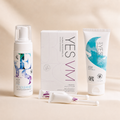
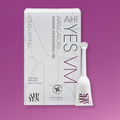
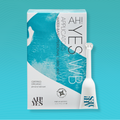
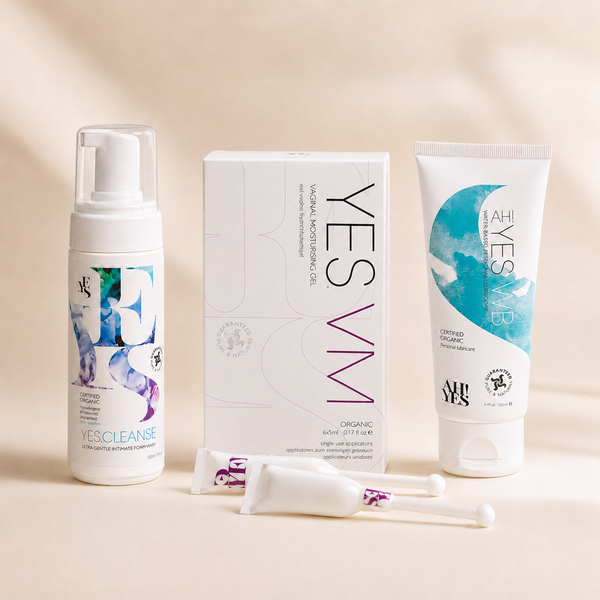
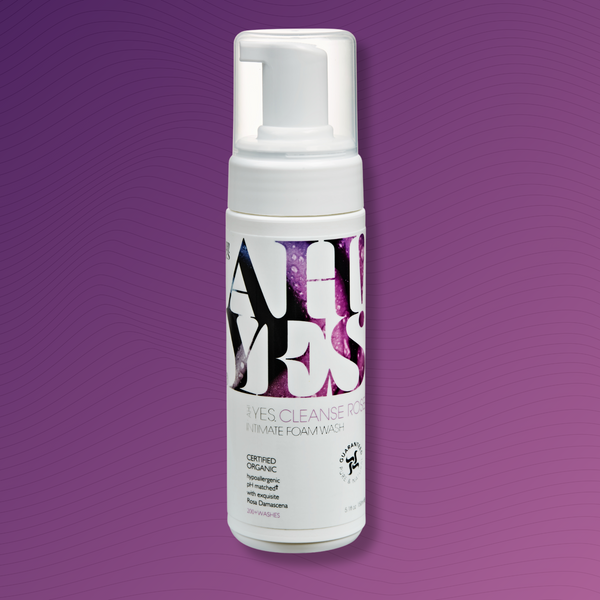
We publish our full ingredient lists. Our lubricants are certified organic and free from glycerin, parabens, propylene glycol and added fragrance, so you won’t find anything from the red or amber lists in them.
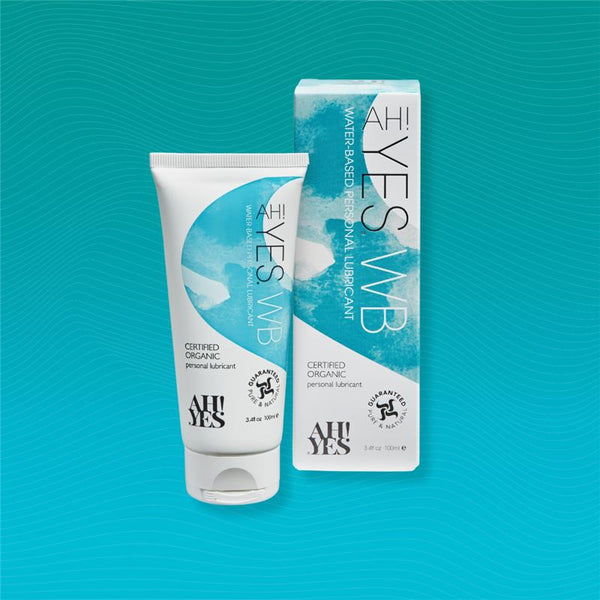
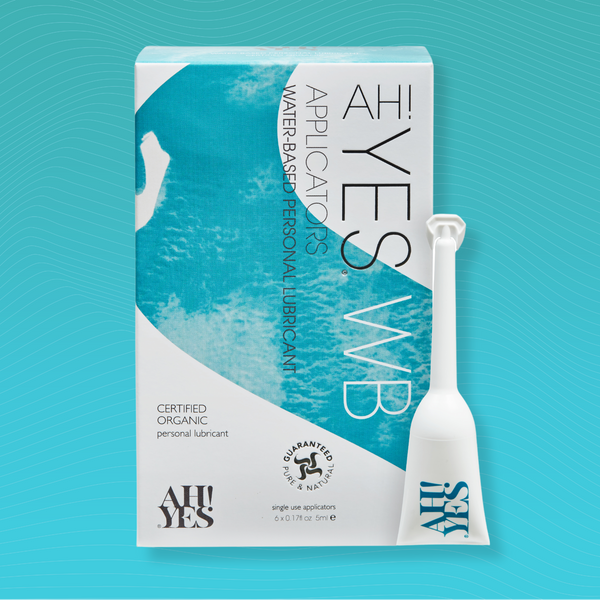
- For a natural feel: WB Water-Based Lubricant is iso-osmotic, pH-matched and compatible with latex and polyisoprene condoms.
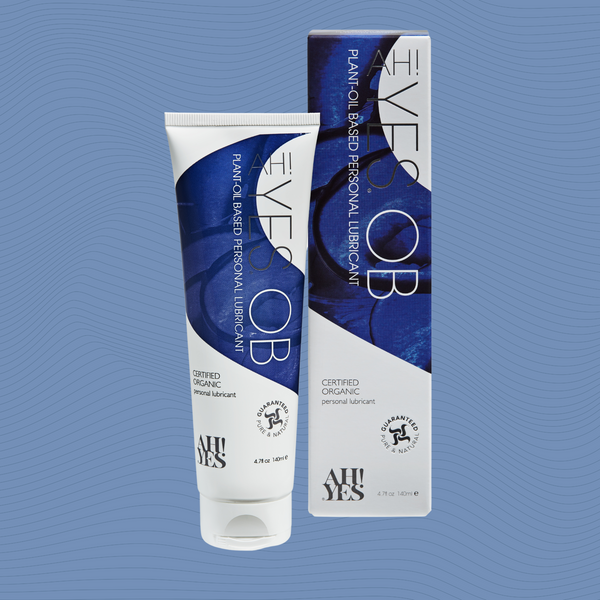
- For a richer glide: OB Oil-Based Lubricant with shea and cocoa butter.
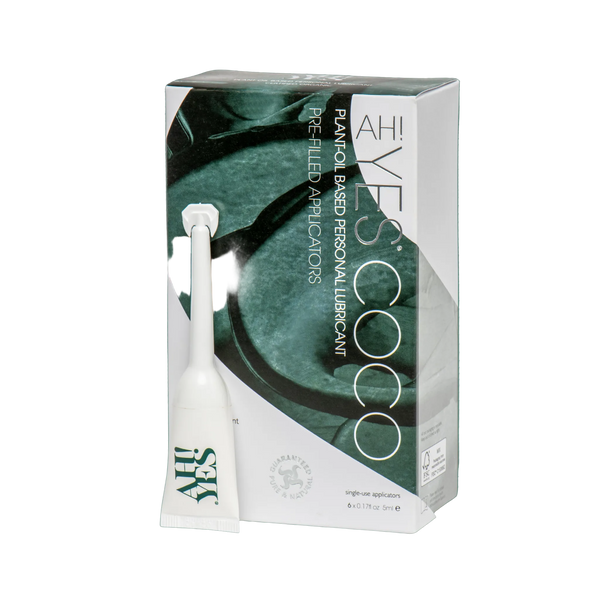
- For clean, mess-free use: COCO Oil-Based Lubricant with coconut and jojoba in single-use applicators.
Oil-based lubricants aren’t compatible with condoms.
Keep this guide handy next time you shop. Five seconds on the back of the package saves a lot of discomfort.
Empower yourself
Read more about the changes your body goes through during peri menopause and post menopause.


